
Garmin© is a giant in GPS mobile tech – but is the sky-high price tag justified?
Everyone’s heard of Garmin. Maybe you’ve got one of their SatNav’s, wear one of their Smart Watches or have a bike computer to map or check performance and health data. But why does it cost so much to join the Garmin club?
Let’s take a ride back through Garmin’s history. It started with ProNav, founded back in 1989 by Gary Burrell in Lenexa, Kansas. He recruited Min H. Kao from defence contractor Magnavox to produce ProNav’s first SatNav for deep-pocketed consumers costing $2,500.
a change of name – and more profits
ProNav rebranded to Garmin, from the two founder names, Gary and Min in 1993. The company began to roll by getting the US Military as its first customer. Four years later, the company had profits of $23 Million on turnover of $105 Million. Four years on, turnover had doubled and profits nearly trebled to $64 Million. By 2005, revenue hit $1.7 Billion and profits hit $1.3 Billion. The next 12 months saw profits jump 73% to an eye-watering $1.7 Billion.
A move into aviation radically expanded the company offerings and the resulting products made the two founders billionaires, seeing Burrell retire by 2003.
prices flying high
As time moved on, the GPS technology Garmin used became well established but by no means unique to Garmin and new competitors were soon able to join the race for this lucrative market. In 2009, fellow US company Wahoo© appeared and is now a significant competitor.
Wahoo, started by Atlanta-based entrepreneur Chip Hawkins is mainly consumer-focused with a range of fitness products, again at premium prices. But here’s where the story takes a twist in the road.
china on the map
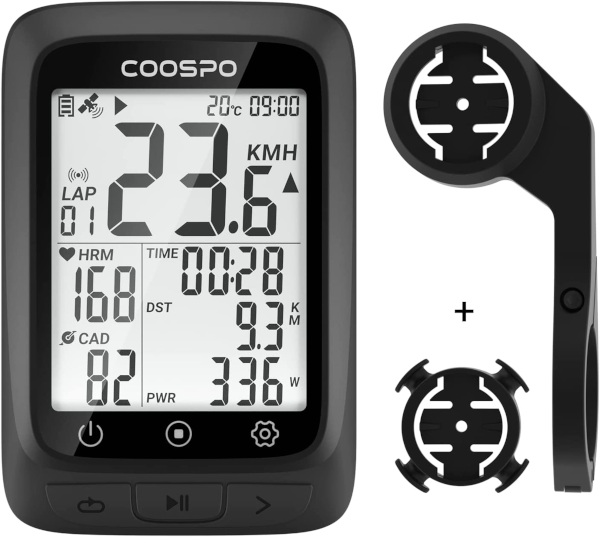
Garmin and Wahoo’s premium products are made in China. Meanwhile, Taiwanese maker Bryton© has shown its possible to offer performance products at a far lower price point, opening the market to even better priced products from Chinese start-ups such as XOSS and CooSpo. Now here’s the question.
What does Garmin offer over the new kids on the block?
The answer is, not much. XOSS and Coospo offer quality and performance products on a par with Garmin. In fact, if you’re a mountain biker like me and prepared to forego the interactive mapping while you’re riding, are happy with great performance, health and post-ride app integration, then you’ll spend £460 less than the typical £500 of a Garmin – and still get seamless integration with Strava©, just like Garmin does. In fact Garmin has some issues – particularly with satellite acquisition on start-up.
I don’t think Garmin will be too worried though. There’ll still be lots of brand followers who are happy to fall for big brand highway robbery. But for many, life’s about the journey – and performance over brand.
People like me, who are very happy with their new Coospo.